Drywood termite spot injections function through precision drilling directly into active termite kick-out holes and acoustic hollow points. Technicians bore 1/8-inch ports into affected lumber, then inject low-pressure…
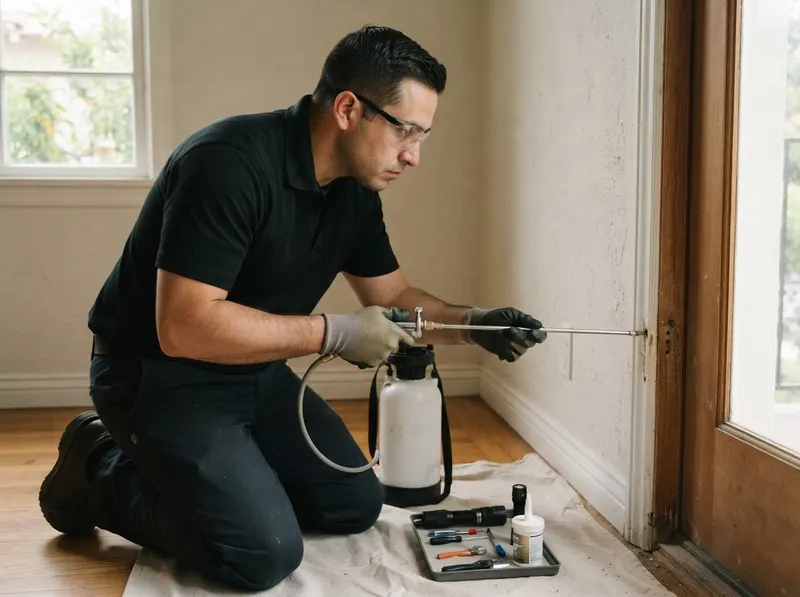
Drywood termite spot injections function through precision drilling directly into active termite kick-out holes and acoustic hollow points. Technicians bore 1/8-inch ports into affected lumber, then inject low-pressure expanding foam or concentrated liquid formulations containing non-repellent active agents such as fipronil or imidacloprid. The foam expands at a 30-to-1 ratio within internal hollows, coating the termites directly and distributing through colony contact as workers groom one another. In historic craftsman bungalows in Los Feliz and Silver Lake, or exposed hillside framing in Sherman Oaks, this method isolates treatments to confirmed infestation pockets without displacing occupants, plants, or pets.
The clinical advantage of spot injections is preservation of interior livability. Traditional sulfuryl fluoride fumigation requires vacating the premises for 72 hours, removing all edible items, bagging medicines, and cutting back perimeter foundation vegetation. Spot injections avoid chemical drift entirely, confining product to sealed wood channels. If drywood termites remain restricted to an exterior eave, fascia board, or single window casing, common in coastal environments like Venice and Pacific Palisades where marine air accelerates soft wood decay, spot treatment neutralizes the risk immediately with zero interior exposure. However, if termite colonies have penetrated multiple inaccessible wall voids across distinct levels of a multi-story home, localized injection is structurally insufficient compared to whole-building remediation.
Technicians follow a standardized five-step application process during every service call: 1. Visual mapping of frass piles and kick-out ports across baseboards, attics, and window headers. 2. Fiber-optic or acoustic sounding along structural members to define gallery boundaries. 3. Drilling 1/8-inch entry ports every 6 to 12 inches along the confirmed flight paths. 4. Regulated delivery of expanding foam termiticide until backpressure indicates gallery saturation. 5. Sealing drill holes with wood dowels and color-matched exterior wood filler. Occupants can remain inside the residence throughout the work, as active chemistry stays sealed within the interior lumber grain.
Every job gets a firm, written price after a free on-site visit.
Tell us about your drywood termite spot injections job in Los Angeles and we'll send a clear, written quote, usually the same day.
 Windmill Pest Control