Professional pest control service in Los Angeles protects interior living spaces, structural timber framing, and building foundations from endemic structural and sanitary threats. Property owners searching for a dependable pest control service near me receive methodical non-invasive inspections, precise physical exclusion work, and transparent chemical re-entry safety timelines.
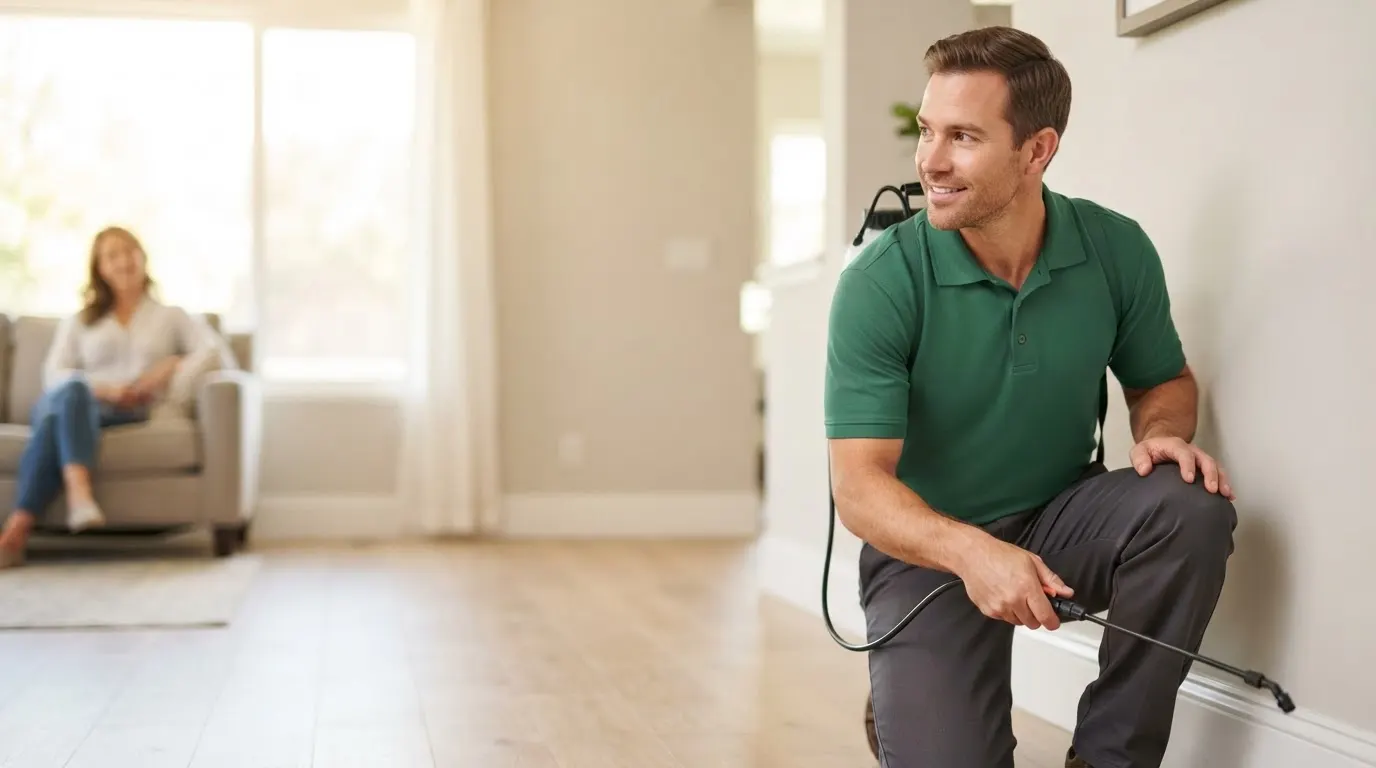
Pest control service in Los Angeles is a targeted biological management, mechanical exclusion, and chemical application service that eliminates structural wood-destroying organisms, sanitary insect populations, and urban rodents from residential and commercial structures.
Every service reflects the same meticulous attention to detail, whether it's a single job or a larger pest control service project across Los Angeles.
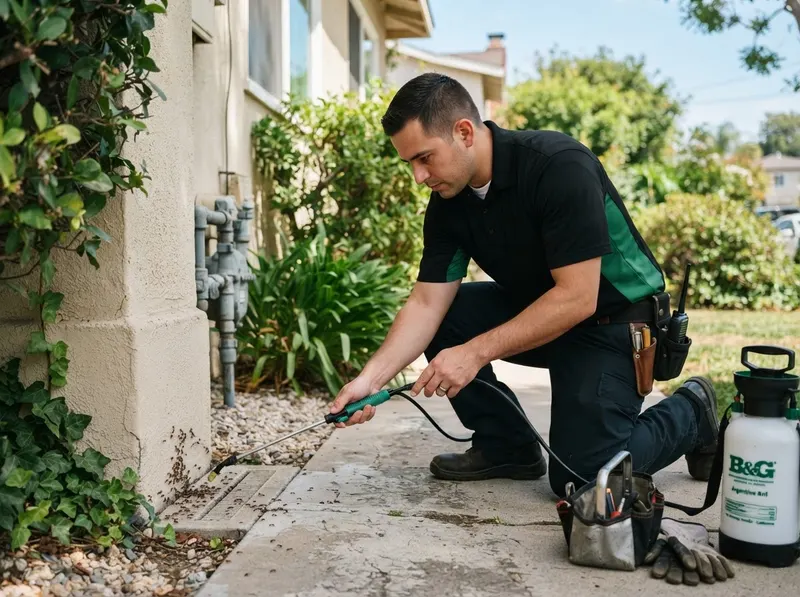
Argentine ants (Linepithema humile) form expansive supercolonies containing millions of individual workers and multiple fertile queens across Los Angeles soil profiles. During extreme summer heat waves or following heavy winter rain bursts, worker trails enter residential foundations through slab expansion joints, masonry cracks, and sill plates to harvest indoor water and sugar sources. Eradication protocols avoid fast-acting repellent pyrethroid sprays, which trigger colony budding and cause queens to disperse satellite colonies deeper into interior drywall voids. Technicians apply non-repellent liquid micro-emulsions along exterior foundation perimeters combined with specialized fipronil or indoxacarb gel baits applied along active interior foraging trails. Worker ants ingest these slow-acting matrices and carry them back into subterranean galleries, distributing the active ingredient through trophallaxis directly to queens and juvenile broods to collapse the reproductive center of the colony over a 10 to 14-day cycle.
Get a quote →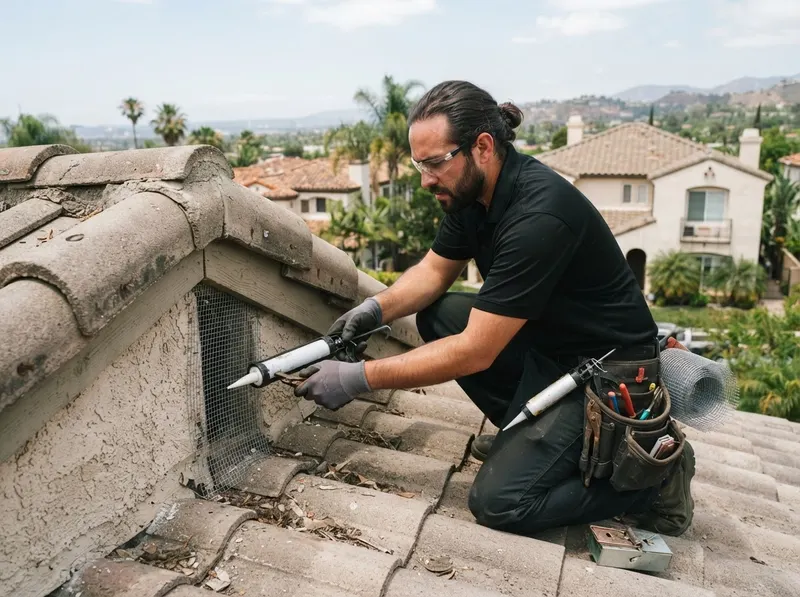
Roof rats (Rattus rattus) are agile structural climbers that navigate elevated travel corridors across Los Angeles, including overhead electrical wires, ivy-covered masonry, and mature palm fronds. Vectors gain access to attics and subflooring by chewing through wood eave corners, soffit transitions, unscreened foundation vents, and roof plumbing vent boots. Remediating roof rat infestations begins with complete mechanical exclusion, sealing all structural openings exceeding 0.25 inches with heavy 18-gauge galvanized steel mesh, concrete patching compounds, and corrosion-resistant metal flashing. Inside contaminated attic voids and drop ceilings, technicians deploy snap-trap matrices along detected runway trails marked by sebum rub marks and droppings. Interior rodenticides are strictly omitted to eliminate the risk of rodents decomposing inside unreachable structural walls. Follow-up visits check and extract trapped rodents, verify trap triggers, and inspect external sealant integrity until zero rodent movement is detected across consecutive nights.
Get a quote →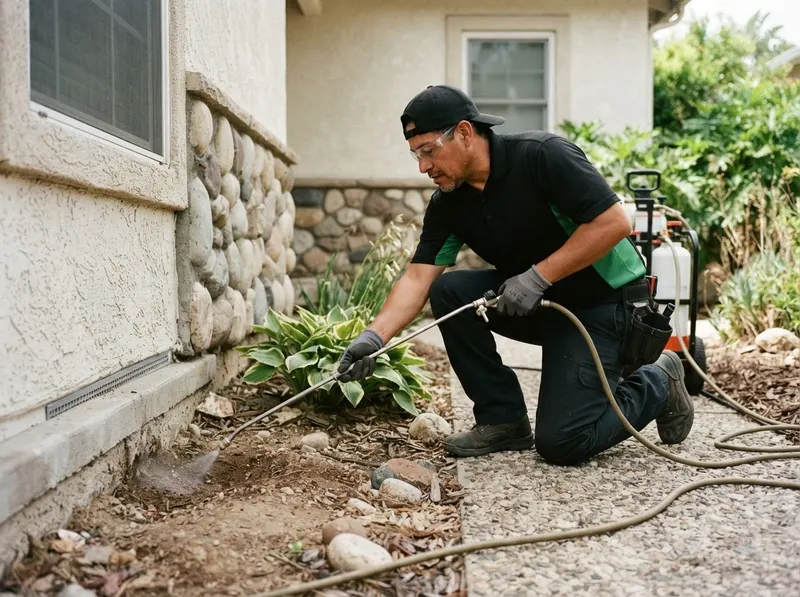
Subterranean termites (Reticulitermes hesperus) live in soil moisture reserves beneath ground level and build protective earthen mud shelter tubes over foundation footings to access structural wood framing. Undetected colonies consume soft springwood along structural studs, subflooring, and sill plates, compromising structural load capacities over sustained timeframes. Technicians trench continuous 6-inch by 6-inch soil excavations along exterior structural stem walls and inject high-capacity non-repellent termiticides such as fipronil or imidacloprid at a calibrated rate of 4 gallons per 10 linear feet. Concrete slabs, exterior patios, and driveways abutting exterior wood framing receive vertical hammer-drill perforations at 12-inch intervals to inject liquid chemical shields beneath concrete surfaces before being sealed flush with hydraulic cement. As subterranean foragers travel through this treated soil barrier, they pick up chemical molecules without detection, spreading the active termiticide throughout the wider colony via mutual grooming.
Get a quote →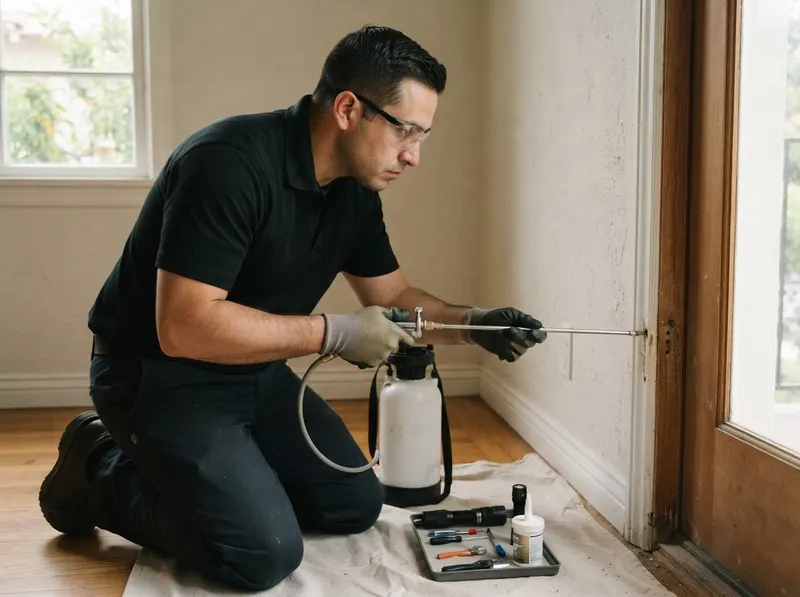
Drywood termites (Incisitermes minor) establish localized colonies entirely inside structural roof rafters, exposed timber fascia boards, window trim, and structural wall framing without requiring ground soil contact. Evidence of drywood termite presence presents as smooth, hexagonal wood fecal pellets pushed out of surface kick-out holes onto flooring below. Technicians map internal gallery cavities using acoustic detection sensors and fiber-optic borescopes, drill precision 7/64-inch inspection holes into occupied framing timber, and inject low-odor liquid or expanding borate foam termiticides directly into gallery pockets. The expanding foam distributes throughout concealed wood chambers, coating gallery walls and killing active nymphs and soldier castes upon contact and ingestion. Spot injections provide an alternative to whole-house structural fumigation tenting when structural timber colonies remain localized, sparing property owners the necessity of multi-day residential evacuation, gas line disconnection, and extensive landscape cutbacks.
Get a quote →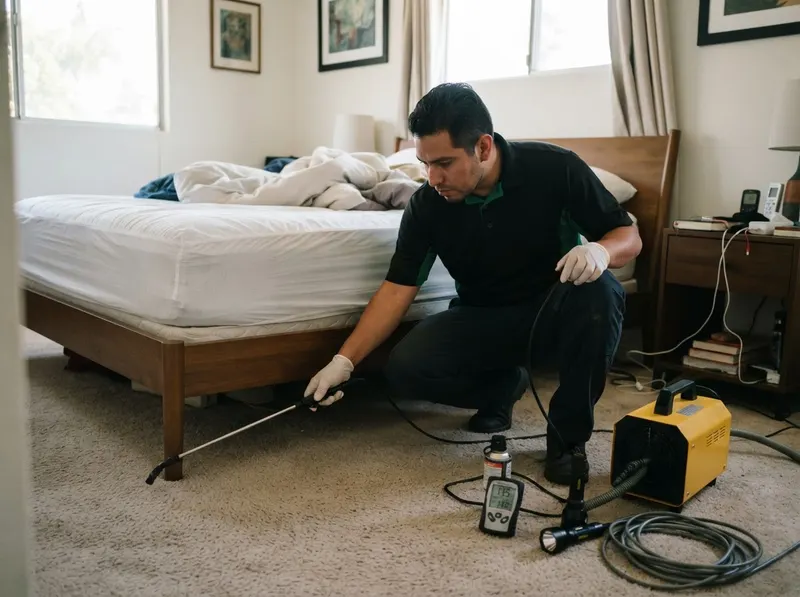
Bed bugs (Cimex lectularius) shelter inside mattress bindings, box spring corners, headboard joints, electrical faceplates, and carpet tack strips, emerging during sleep cycles to feed on human hosts. Eradication protocols use high-output mobile convective thermal heaters to uniformly raise room air and structural void temperatures to a verified lethal range between 122°F and 135°F. Calibrated high-velocity air movers circulate heated air into furniture fabrics, wall cavities, and mattress seams for a sustained 120-minute thermal dwell time, denaturing bed bug cellular proteins and neutralizing all egg stages. Technicians place wireless temperature sensors throughout structural seams to confirm lethal temperatures reach deep harborages. Following thermal cool-down, technicians apply non-pyrethroid silica dust and desiccant powders beneath wall baseboards and inside electrical junction boxes to form a continuous physical barrier that dehydrates and destroys any migrating bed bugs entering from adjacent spaces.
Get a quote →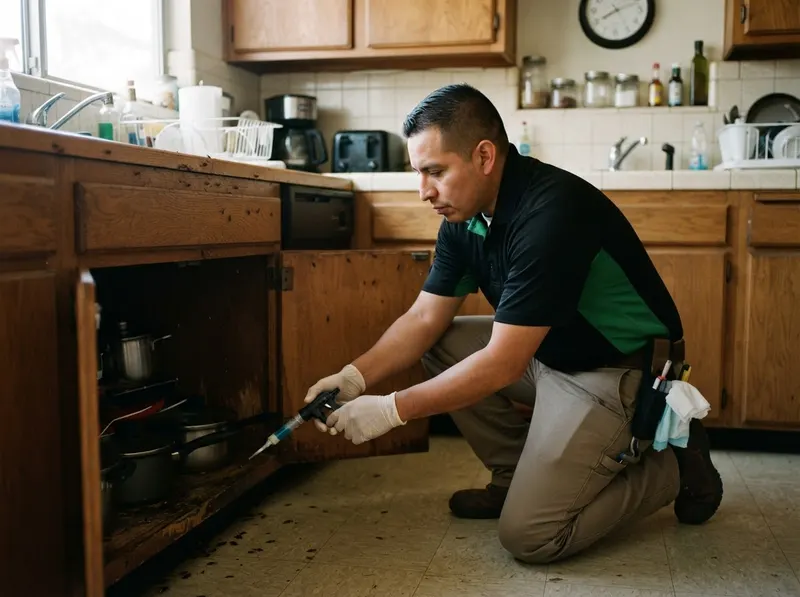
German cockroaches (Blattella germanica) reproduce at exceptional biological rates inside warm residential kitchens, restaurant food preparation areas, and bathroom pipe recesses. Female roaches deposit ootheca egg capsules that yield up to 40 nymphs every 3 to 4 weeks, spreading structural allergens, bacteria, and food-borne pathogens across counter surfaces. Treatment combines mechanical extraction and targeted chemical management. Technicians utilize specialized high-efficiency particulate air (HEPA) vacuum equipment to pull active clusters directly out of refrigerator motor compressors, hollow cabinet framework, and dishwasher kick-plates. Following mechanical extraction, targeted micro-droplet gel baits containing abamectin or hydramethylnon are placed inside structural hinges, plumbing wall escutcheons, and electrical access panels out of sight of children and pets. Technicians combine these baits with juvenile hormone mimics (IGRs) like pyriproxyfen, which disrupt chitin synthesis and permanently sterilize surviving nymphs to break the breeding cycle.
Get a quote →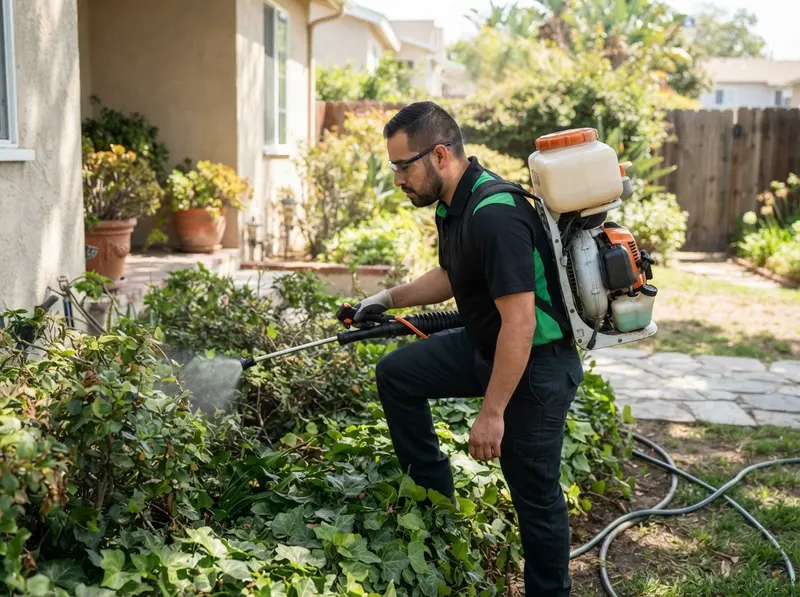
Invasive container-breeding mosquitoes, including the daytime-biting Asian tiger mosquito (Aedes albopictus) and yellow fever mosquito (Aedes aegypti), thrive in urban Los Angeles residential yards. Female mosquitoes deposit desiccation-resistant eggs in micro-reservoirs holding less than a teaspoon of stagnant water, such as terracotta plant saucers, unmaintained gutter runs, and landscape drain sumps. Mitigation programs utilize an integrated approach combining biological larvicides and targeted adult reduction. Technicians apply biological Bacillus thuringiensis israelensis (BTI) microbial rings or granular juvenile hormone regulators to standing landscape water sources, catch basins, and uncirculated yard fountains to kill mosquito larvae before adult emergence. Technicians then treat shaded perimeter foliage, dense ivy beds, under-deck voids, and broad-leaf ornamental plants with micro-encapsulated synthetic pyrethroids via ultra-low-volume cold fogging equipment, eliminating resting adult populations without harming turf or pollinating garden plots.
Get a quote →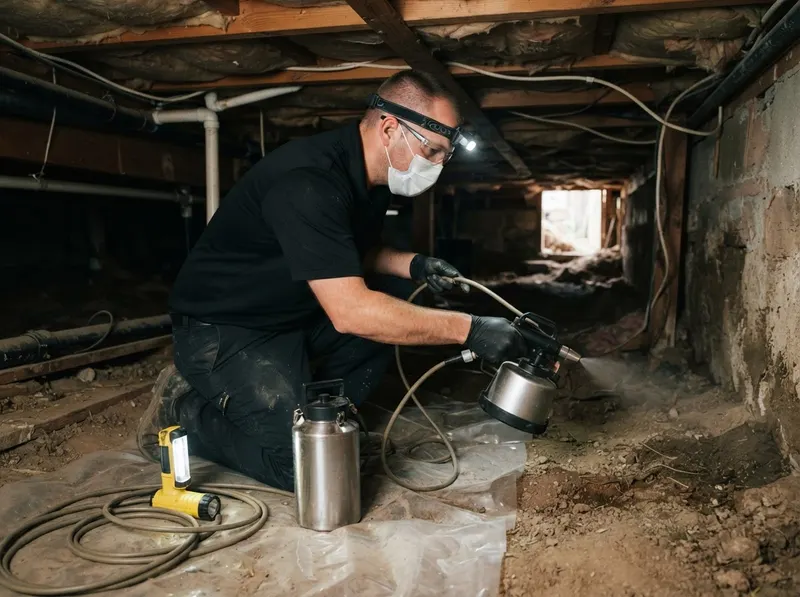
Following the removal of rodents, raccoons, or feral vectors from residential crawl spaces and attic voids, biological waste deposits remain behind as hazardous structural contaminants. Accumulated rodent urine, droppings, and nesting debris harbor dangerous pathogens, generate foul airborne ammonia odors, and host secondary parasites like bird mites, fleas, and dermestid beetles. Crawl space remediation teams enter structural voids in full personal protective gear equipped with sealed HEPA-filtered negative-air collection systems to bag and extract all contaminated fiberglass batt insulation. Technicians mechanically scrape hard framing members and apply broad-spectrum antimicrobial and virucidal biocides through cold atomizing foggers to disinfect exposed wood joists, sill plates, and subfloor sheathing. Finally, teams install fresh 10-mil polyethylene vapor barrier membranes over exposed earth floors to prevent soil dampness, inhibit subfloor mold growth, and eliminate vector pheromone attractants.
Get a quote →You get a firm, itemized quote for your pest control service before any work begins, no surprises, no pressure.
Careful prep, tidy work, and a full cleanup when we are done. We treat your home and belongings like our own.
The same trusted, background-checked team from the first call to the final check.
Selecting an effective pest management strategy in Los Angeles requires balancing the target organism biology, structural architectural vulnerabilities, and household exposure tolerances. If dealing with food-infesting insects such as German cockroaches or Argentine ants, choose targeted gel baits containing indoxacarb or fipronil combined with insect growth regulators like pyriproxyfen rather than broad-spectrum repellent sprays; gel baits and growth regulators transfer through trophallaxis to kill nested reproductive queens without dispersing airborne chemical droplets throughout kitchen spaces, though total population collapse requires 7 to 14 days of bait feeding. If a property exhibits drywood termite frass or subterranean mud tubing, select localized non-repellent liquid injections or borate foam treatments for accessible wood galleries, or whole-structure sulfuryl fluoride fumigation when colonies penetrate inaccessible framing timbers; localized injections avoid occupant displacement, dry food bagging, and multi-day hotel stays, while whole-structure fumigation remains the only treatment capable of reaching inaccessible ceiling plates and concealed wall framing.
If rodents occupy an attic, crawlspace, or sub-floor void, select mechanical multi-catch trapping paired with complete architectural exclusion rather than interior rodenticide bait blocks; interior poisons frequently cause rodents to die within enclosed wall voids, creating biological hazards, putrefactive odors, and secondary dermestid carpet beetle infestations, whereas mechanical trapping enables immediate physical carcass retrieval. Isolated structural treatments begin at the base $250 diagnostic tier, whereas properties adjacent to the Santa Monica Mountains or Elysian Park benefit from scheduled exterior perimeter rotations that continuously intercept vectors before they cross foundation expansion joints.
Every project gets a firm, written price after a free on-site visit. Ranges below for orientation.
Tell us about your pest control service job and we'll send a clear, written quote, usually the same day. Or just call and talk to a real Los Angeles pro.
(424) 573-7732
Los Angeles features complex micro-climates, soil variations, and distinct regional topographies that dictate insect breeding cycles and urban wildlife movement across Los Angeles County. Properties bordering chaparral hillsides around Griffith Park, Elysian Park, and Kenneth Hahn State Recreation Area experience acute dry-season rodent migrations into attics and subflooring from August through November when natural canyon water sources evaporate. In contrast, residential parcels surrounding the Sepulveda Basin, Exposition Park, and the La Brea Tar Pits confront intense moisture-seeking Argentine ant supercolonies and invasive Aedes mosquito breeding sustained by landscape runoff and shallow municipal stormwater basins. The city's architectural variety creates distinct structural pest vulnerabilities: early 20th-century wood-framed craftsman homes and Spanish revival bungalows in Highland Park, Silver Lake, Echo Park, and Boyle Heights frequently sustain localized drywood termite infestations within aged Douglas fir framing timbers. Conversely, coastal marine layer humidity and high sandy water tables in Venice, Brentwood, and Pacific Palisades foster elevated subterranean termite swarm pressures along concrete foundation footings. Navigating treatment logistics along major transit corridors like the I-10, US-101, and I-405 demands responsive localized service dispatching so technicians arrive equipped with specialized materials tailored to each distinct neighborhood ecosystem.
Free estimates for Los Angeles & the surrounding area.
 Windmill Pest Control